
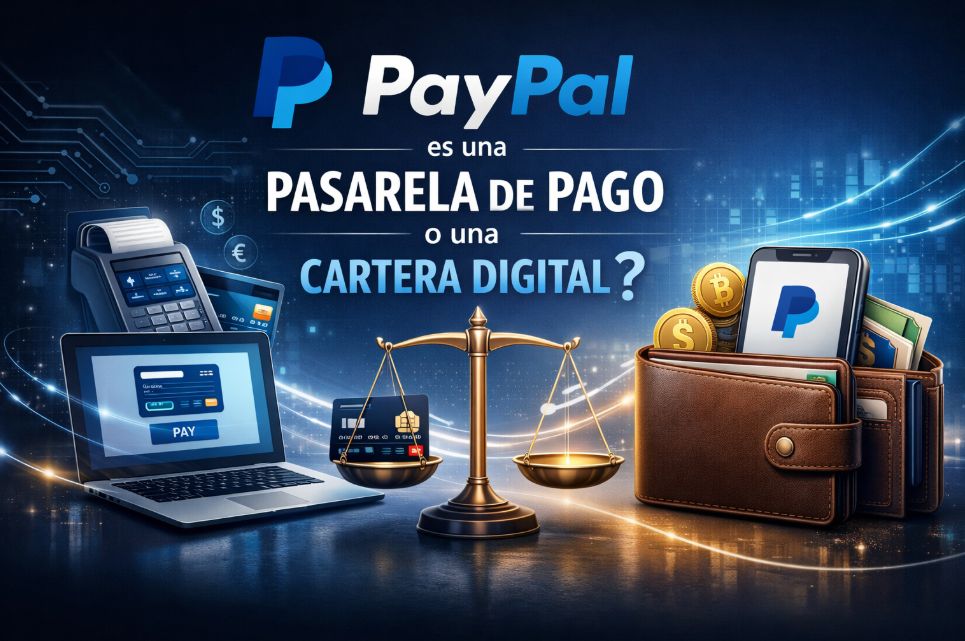
PayPal is mainly a digital wallet or wallet, although it also works as a payment gateway (payment gateway). This is because it is due to the versatility of this platform, which currently has more than 439 million active accounts.
The confusion comes from the fact that it actually does both functions and is useful whether you need it as a gateway to receive payments in your online store or whether it suits you better as a personal wallet.
And in this post I explain how PayPal works and when another payment alternative is better for your business.
What is PayPal?
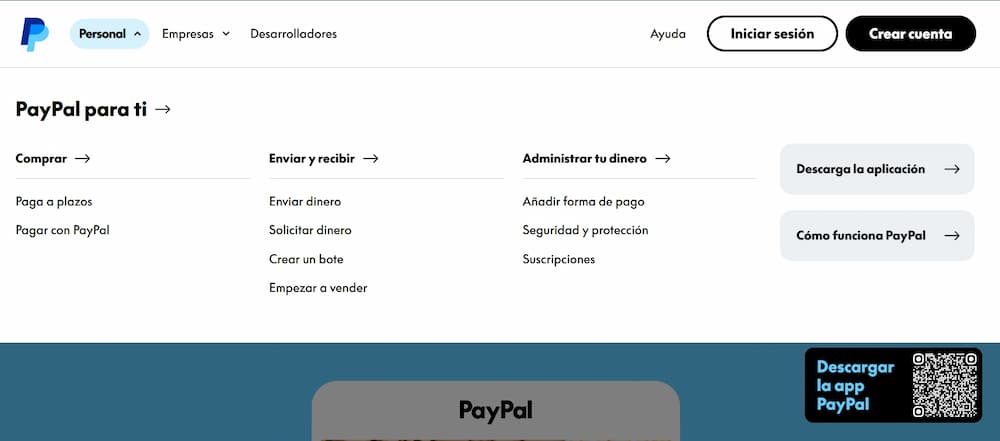
In case you didn’t know, PayPal is a digital wallet and a payment gateway: all in one. That is, it allows you to send and receive money, buy in millions of online and physical stores securely, and if you have a business, it makes it easier for you to accept payments without unnecessary risks.
Born in 1998, by the hand of Max Levchin, Peter Thiel and Luke Nosek. It later merged with X.com, Elon Musk's company, and together they revolutionized online payments.
Now, its greatest appeal is that it eliminates the need to share bank details in every transaction. Before, every online purchase was a gamble, and now, with PayPal, the customer only shares their email address.
Today, the platform has 439 million active accounts worldwide and processed more than $1.79 trillion in payments just during 2025. And it all started with a couple of entrepreneurs who thought that internet payments should be simpler.
What is PayPal used for?
In essence, It serves to move money from one place to another without bank details traveling with each transaction. That is its essence, yes, but if we analyze it more deeply, it has three main uses.
To buy online
When you pay in a store with PayPal, you don’t enter your card numbers and you only log in to your account to confirm the payment.
Of course, that is a safer, faster method and without having to fill out forms every time.
To send and receive money between individuals
This is one of its main functions. Do you owe a friend 20 euros? Well, with their email or mobile number, you can send it to them instantly.
And to sweeten the picture, nthere are no waits or commissions if you use balance or bank account. That’s why it’s so popular on second-hand platforms or for payments between individuals.
For businesses to charge online
On the other hand, if you have a store, PayPal gives you everything you need: a payment button, a secure checkout, and the confidence that your customer will see a logo they know.
As you can see, with these features you don’t even need a separate payment gateway or bank, because the platform integrates everything into one.
Trust in your business
Moreover, PayPal serves a purpose that is not always appreciated: giving customers confidence. It’s simple, since if a buyer has never heard of your store, they think twice before entering their card details.
But if you see the blue PayPal logo, many doubts disappear. That, in ecommerce, translates into more sales and greater security for buyers.
Differences between payment gateway and digital wallet
Essentially, the main difference is that the digital wallet or wallet is yours, in other words, it is like your physical wallet, while the payment gateway is for merchants, because it allows them to receive your payment securely and through different methods.
You can see other differences in the following comparison table:
| Feature | 📱 Digital wallet (Wallet) | 🛡Payment gateway (gateway) |
| Definition | App that stores your cards and money so you can pay quickly. | Technology that processes and authorizes payment between banks. |
| Main user | The end customer (you). | The merchant or business owner. |
| Main function | Store balance and pay with one click. | Encrypt and transmit data to approve the purchase. |
| Do you store money? | Yes, you can have your own accumulated balance. | No, it is only the bridge that moves the funds. |
| Where it is used | On your mobile, apps and physical stores. | Integrated into the online store checkout. |
| Speed | Snapshot (you pay with a tap). | Depends on the bank (seconds to minutes). |
| Security | Protect your privacy and personal data. | Focused on preventing fraud for the seller. |
| Examples | Apple Pay, Google Wallet, Venmo. | Stripe, RiskPayGo, Authorize.net. |
A simple example with Paypal
You can see the differences in this example:
When you pay with PayPal in an online store, you are using PayPal as a digital wallet, that is, you choose to pay from your balance or saved cards.
At the same time, the merchant is using PayPal as a payment gateway to receive the money securely.
So, is PayPal a payment gateway or a wallet?
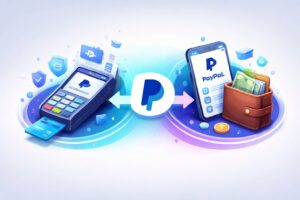
Both things. For you (the user), it is a wallet and for stores, it is a payment gateway.
What happens is that most people use it as a digital wallet because that is the daily experience: storing money and paying easily. Meanwhile, the gateway part is what businesses use behind the scenes.
When it’s convenient for you to use PayPal in your business (and when it isn’t)
This is the million-dollar question and although we’re talking about the biggest name in the history of digital payments, in today’s ecosystem it is not a universal solution.
💳 The moments when PayPal is unbeatable
There are scenarios where not having that yellow button is, literally, leaving money on the table:
- When your brand is still new: if the customer doesn’t know you, they won’t want to leave their card details in your database; that’s where PayPal acts as a trust shield that transfers its reputation to your store.
- International sales without friction: PayPal automatically handles currency conversion for the user, making it easy for someone in Berlin to buy from you as easily as someone in Madrid.
- Impulse buying on mobile: thanks to its Smart Payment Buttons, the user pays with their fingerprint or FaceID without having to look for their physical wallet, reducing cart abandonment at the critical moment.
⚠️ When should you look for an alternative (like RiskPayGo)
Not everything is rosy; there are “small print” details that can suffocate your business operations:
- If your average ticket is very low: las comisiones fijas de PayPal (que suelen rondar los $0.30 – $0.49 por transacción más el porcentaje) pueden representar un 10% o más de tus ingresos si vendes productos de poco valor.
- High-risk businesses or complex subscriptions: PayPal is extremely conservative; if it detects an unusual spike in sales or you work in “sensitive” niches, they can freeze your funds for 180 days without prior notice, something that for a startup means immediate bankruptcy.
- In sectors with high chargebacks: although they offer protection to the seller, the dispute process in PayPal is usually slow and, in many cases, leans in favor of the buyer, leaving you without the product and without the money.
My verdict is that you can use PayPal as a trusted add-on, but never as your only gateway.
Ideally, offer options like RiskPayGo, which is a high-risk payment gateway and it will become a true ally for your business.
Frequently Asked Questions
Can I use PayPal without linking a bank account?
Yes, you can use PayPal without linking a bank account, but with limitations. You can pay using a debit or credit card linked to your PayPal account without needing to add a bank.
Is PayPal safe for receiving payments in my online business?
Yes, PayPal is one of the safest payment platforms in the world, for both buyers and sellers. It uses advanced encryption systems and includes fraud protection.
What fees does PayPal charge and how do they affect my business?
PayPal charges fees for receiving payments, which usually range around 2.9% + a fixed fee per transaction, although they may vary depending on the country and the type of transaction.